#EMPLOYMENT & SOCIETY
“My pay keeps up with inflation.” Euro-area households aren’t convinced: in September 2026 they expect 3.1% inflation over a year… but only 1.1% growth in their income.
Published on October 25, 2026 · to be rechecked on December 31, 2026
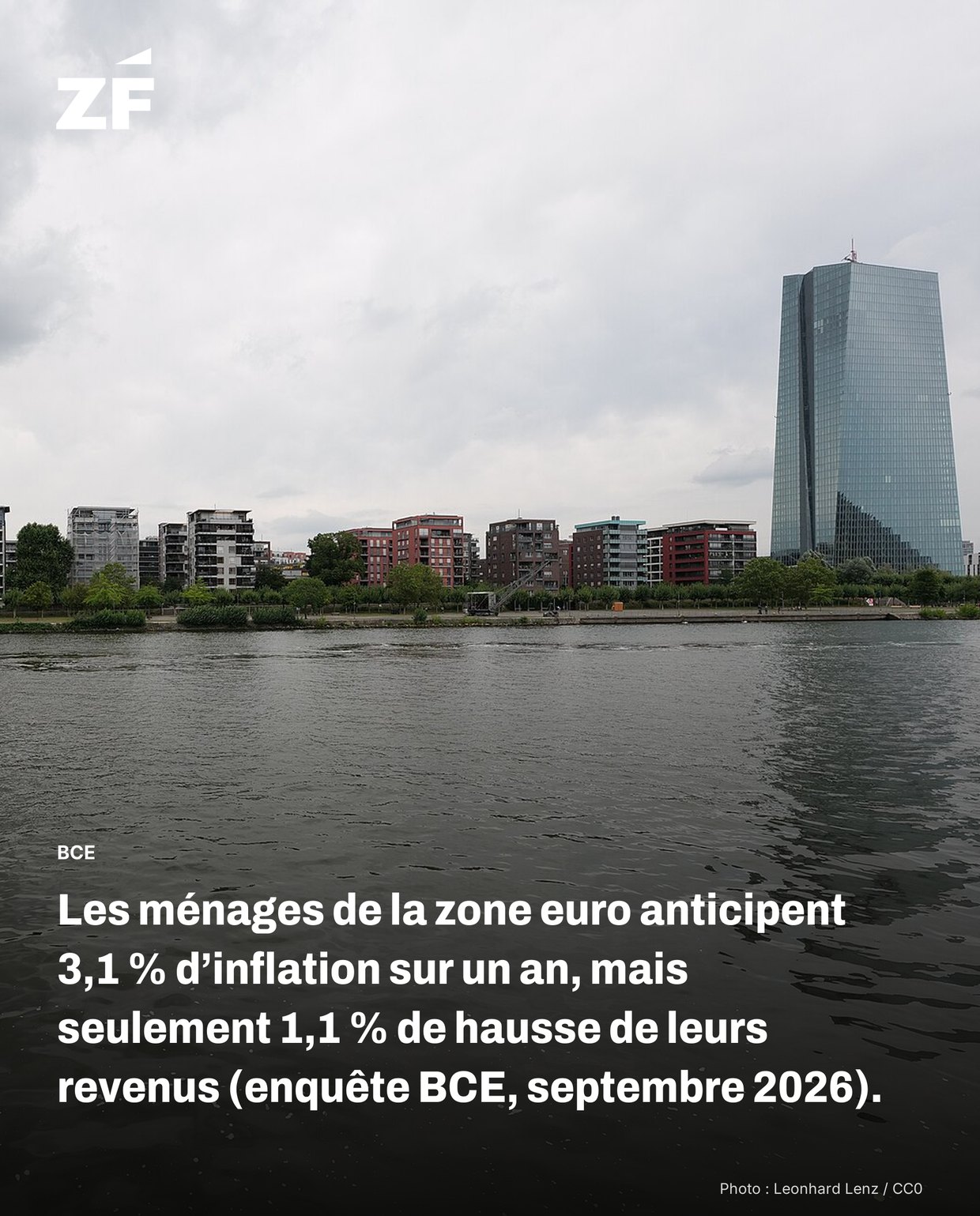
According to the ECB Consumer Expectations Survey (September 2026 data, published 23 October), euro-area households expect inflation of 3.1% over the next twelve months, slightly up (3.0% in August). At the same time, they expect only 1.1% growth in their nominal income. Many therefore expect prices to rise faster than their income. Longer-term expectations stay lower: 2.9% at 3 years and 2.5% at 5 years. A reading caveat: the 3.1% is a median and the 1.1% a (winsorised) mean — two different statistics that cannot simply be subtracted to get a “loss of purchasing power”.
Do 3.1% expected inflation and 1.1% expected income mean 2% less purchasing power?
No, not directly: these are expectations (what people think), not realised figures. And the two don’t subtract: inflation is a median, income a mean. The takeaway is the perceived gap: households expect prices to rise faster than their income.
In other words: this survey measures sentiment and expectations, not realised purchasing power — but the perceived gap (prices > income) weighs on confidence and spending.
Four caveats that belong with the number
- These are stated expectations, not realised figures: they say what households fear, not what will happen.
- 3.1% (inflation) is a median; 1.1% (income) is a winsorised mean — two different statistics, not to be subtracted.
- Longer-term expectations stay lower: 2.9% at 3 years, 2.5% at 5 years, closer to the ECB’s 2% target.
- Expectations vary by income: expected income growth is higher at the bottom of the scale (1.5%) than at the top.
Why it still matters: to understand: high inflation expectations can become self-fulfilling (prices, wages), and the ECB watches them because they shape its rate policy. For households: the perceived gap between prices and income feeds the cost-of-living feeling.
For you
- Do you think your income will keep up with inflation next year?
- Do you know why the ECB watches inflation expectations so closely?
Sources: ECB Consumer Expectations Survey (September 2026 data, published 23 October 2026).
View the source →