#MARKETS & INVESTING
The Cambridge Centre for Alternative Finance puts the bitcoin network's annual electricity use at 138 TWh, or roughly 0.5% of world electricity consumption.
Published on August 26, 2026 · to be rechecked on May 1, 2027
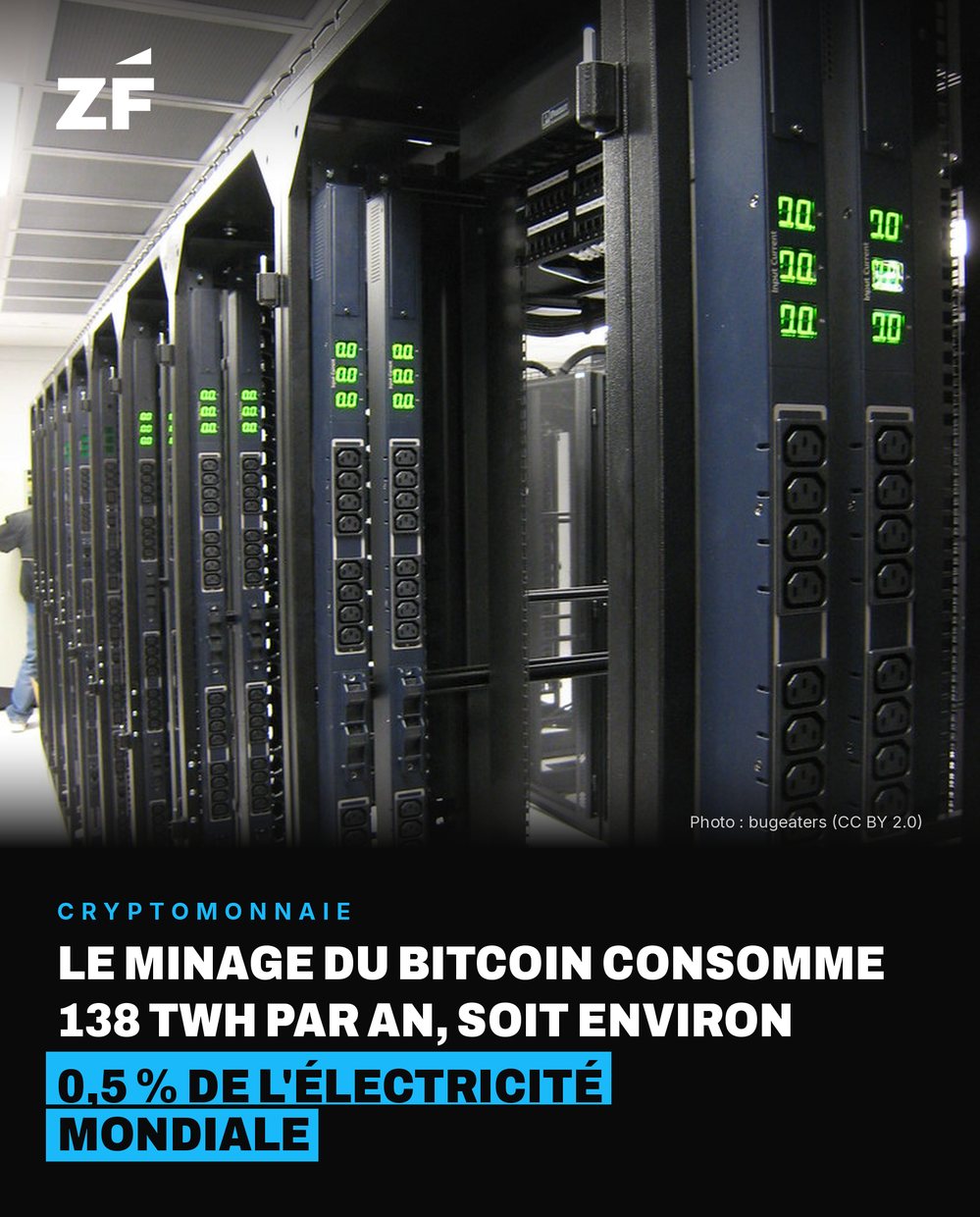
The Cambridge Digital Mining Industry Report, published on 28 April 2025 by the Cambridge Centre for Alternative Finance at Cambridge Judge Business School, is built on a survey of 49 mining firms, 41% of them publicly listed, operating across 23 countries and accounting for 48% of reported global mining activity. It puts annual network consumption at 138 TWh, roughly 0.5% of world electricity use, and associated emissions at 39.8 MtCO2e. It also measures the energy mix: 52.4% low-carbon sources (42.6% renewables, 9.8% nuclear), with natural gas rising to 38.2% from 25.0% in 2022 and coal falling to 8.9% from 36.6%. The International Energy Agency reaches the same order of magnitude by a different route in its Electricity 2024 report: about 110 TWh for all cryptocurrencies in 2022, or 0.4% of global electricity demand, with a projection of around 160 TWh by 2026.
Does bitcoin really use as much electricity as an entire country?
Cambridge puts mining at 138 TWh a year, about 0.5% of world electricity. The IEA measures 110 TWh for all cryptocurrencies in 2022, or 0.4% of global demand.
In other words: the order of magnitude is that of a mid-sized country, not a continent.
Four caveats, because they matter
- The 138 TWh comes from a survey covering 48% of mining activity: the rest is extrapolated, not measured.
- The same centre publishes a model-based index, the CBECI, which returns a materially higher figure: two methods from one lab do not agree.
- The IEA covers all cryptocurrencies, Cambridge covers bitcoin alone: the two numbers do not map onto each other exactly.
- Consumption is not a carbon footprint: 52.4% of the reported mix is low-carbon, which shifts the question from how much energy to where it comes from.
Why it still matters: the argument turns less on a single number than on its uncertainty: two serious methods applied to the same network do not produce the same result.
For you
- Can a figure on which two methods from the same lab disagree settle an argument?
- Did you know bitcoin mining accounts for roughly 0.5% of the world's electricity consumption?
Source: Cambridge Centre for Alternative Finance, "Cambridge Digital Mining Industry Report", Cambridge Judge Business School, 28 April 2025; International Energy Agency, "Electricity 2024", January 2024.
View the source →