#SAVINGS & FINANCIAL PRODUCTS
One single percentage point of fees a year doesn't cost one point. Over thirty years, it swallows nearly a quarter of the final capital.
Published on August 13, 2026
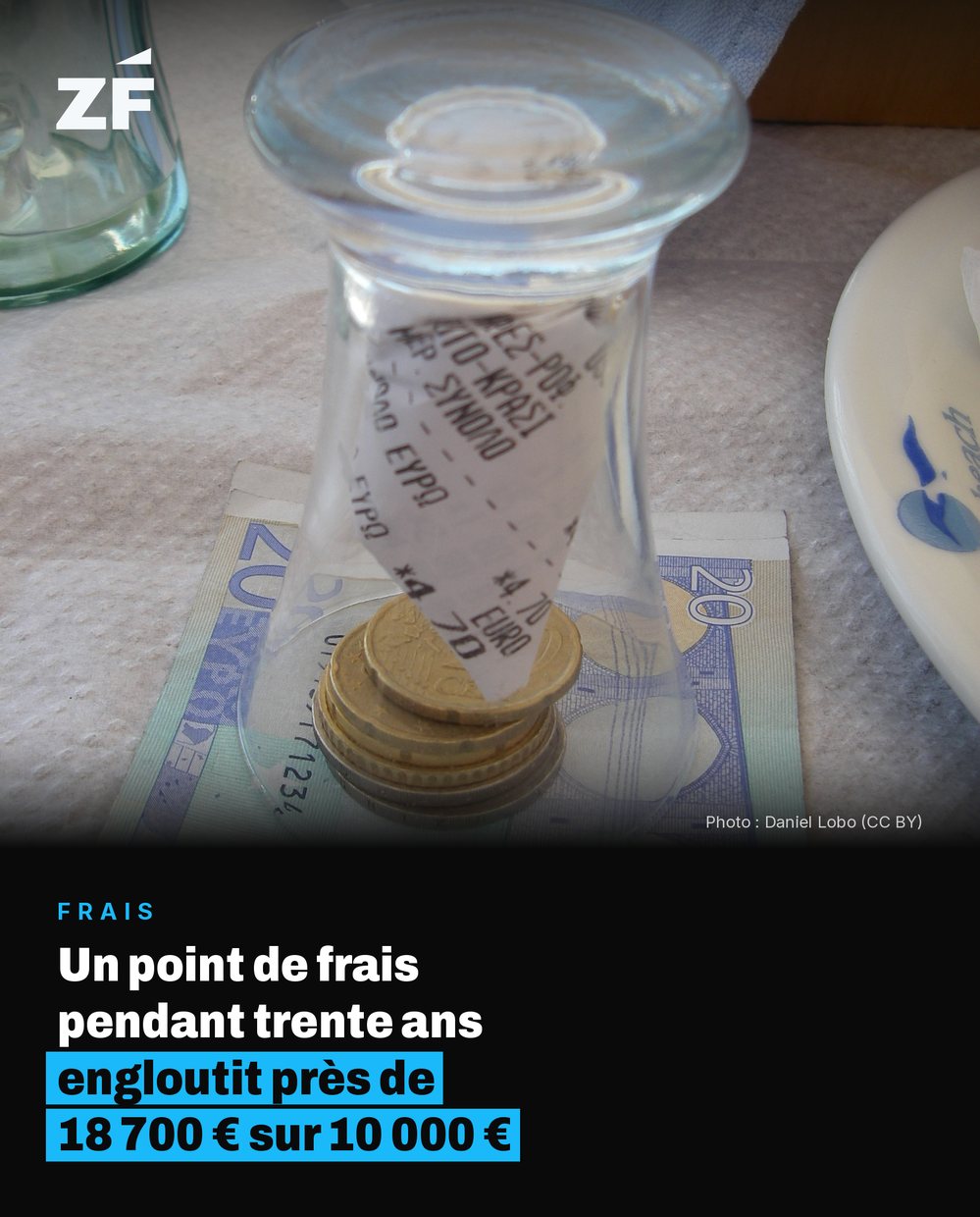
The math is reproducible and doesn't depend on any study. Ten thousand euros invested for thirty years at 7% a year become €76,123. The same ten thousand euros at 6% — meaning with one percentage point of annual fees — become €57,435. The gap reaches €18,688, or nearly a quarter of the final capital — for a single percentage point that looks harmless on a sales brochure.
Why such a large gap for just one point?
Because fees don't simply subtract from the return: they compound against you, year after year, on capital that should have kept growing. The longer the horizon, the wider the gap.
In other words: fees aren't a percentage, they're euros. The percentage is what makes them look small.
Three caveats, because they matter
- This calculation assumes a constant return, which no market delivers. Reality alternates good and bad years; the mechanism stays the same, and so does the order of magnitude.
- It accounts for neither taxes, nor entry fees, nor additional contributions. Each of these widens the gap rather than narrowing it.
- High fees aren't necessarily unjustified: the question is what they buy. It isn't whether they exist, it's what you measurably get in return.
Why it still matters: comparing two investments on their reported return alone makes no sense. At equal returns, a one-point fee gap decides nearly a quarter of the outcome over a saver's lifetime — and it's the one variable in the equation you actually control.
For you
- Do you know the total annual fees charged on your investments, in euros rather than percent?
- If you can't find it in your contract documents, why isn't it there?
Source: Ze Finance calculation, annual compounding over 30 years at 7% and at 6%. Reproducible with any spreadsheet.