#SAVINGS & FINANCIAL PRODUCTS
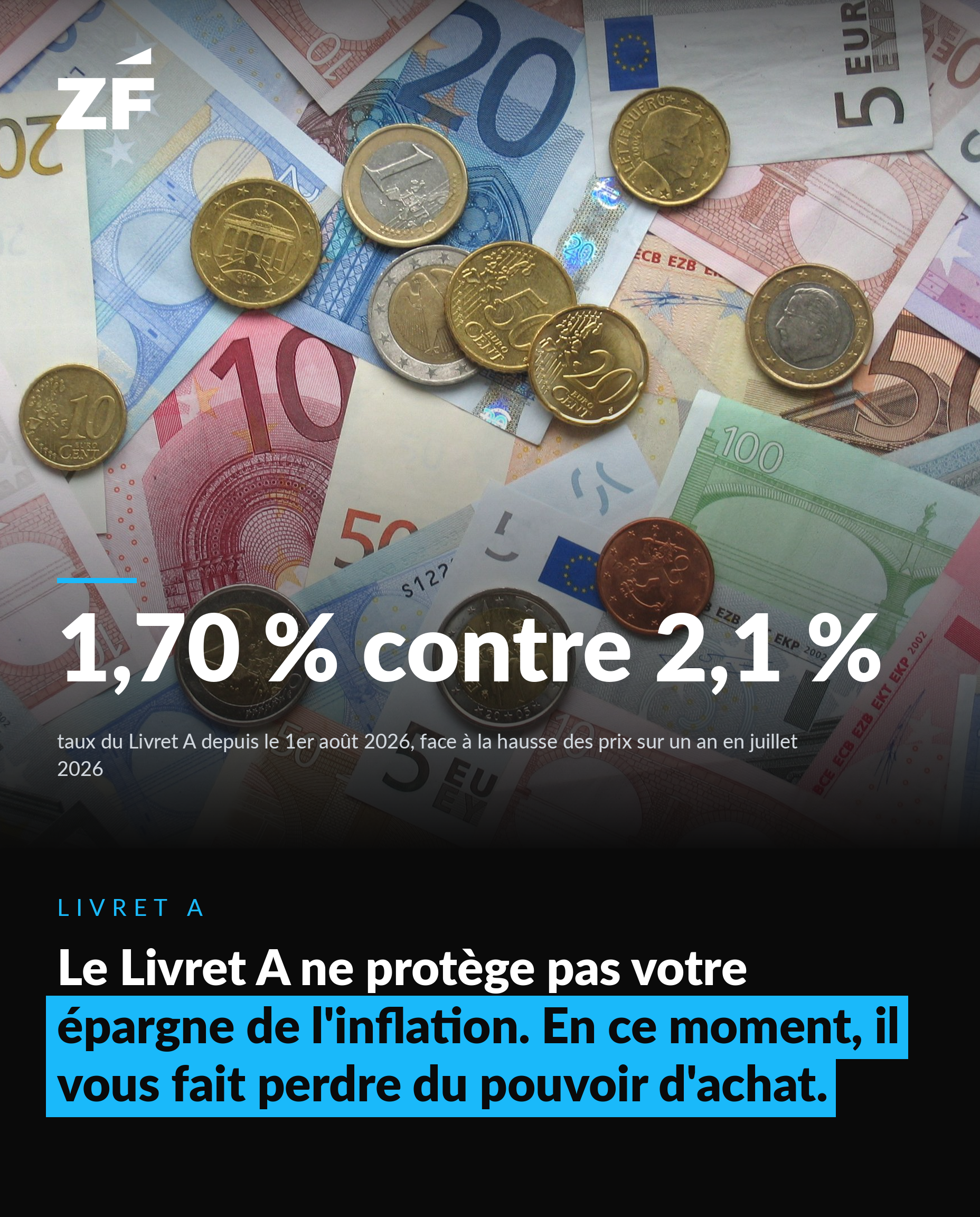
The Livret A doesn't protect your savings from inflation. Right now, it's costing you purchasing power.
Published on August 8, 2026 · to be rechecked on February 1, 2027
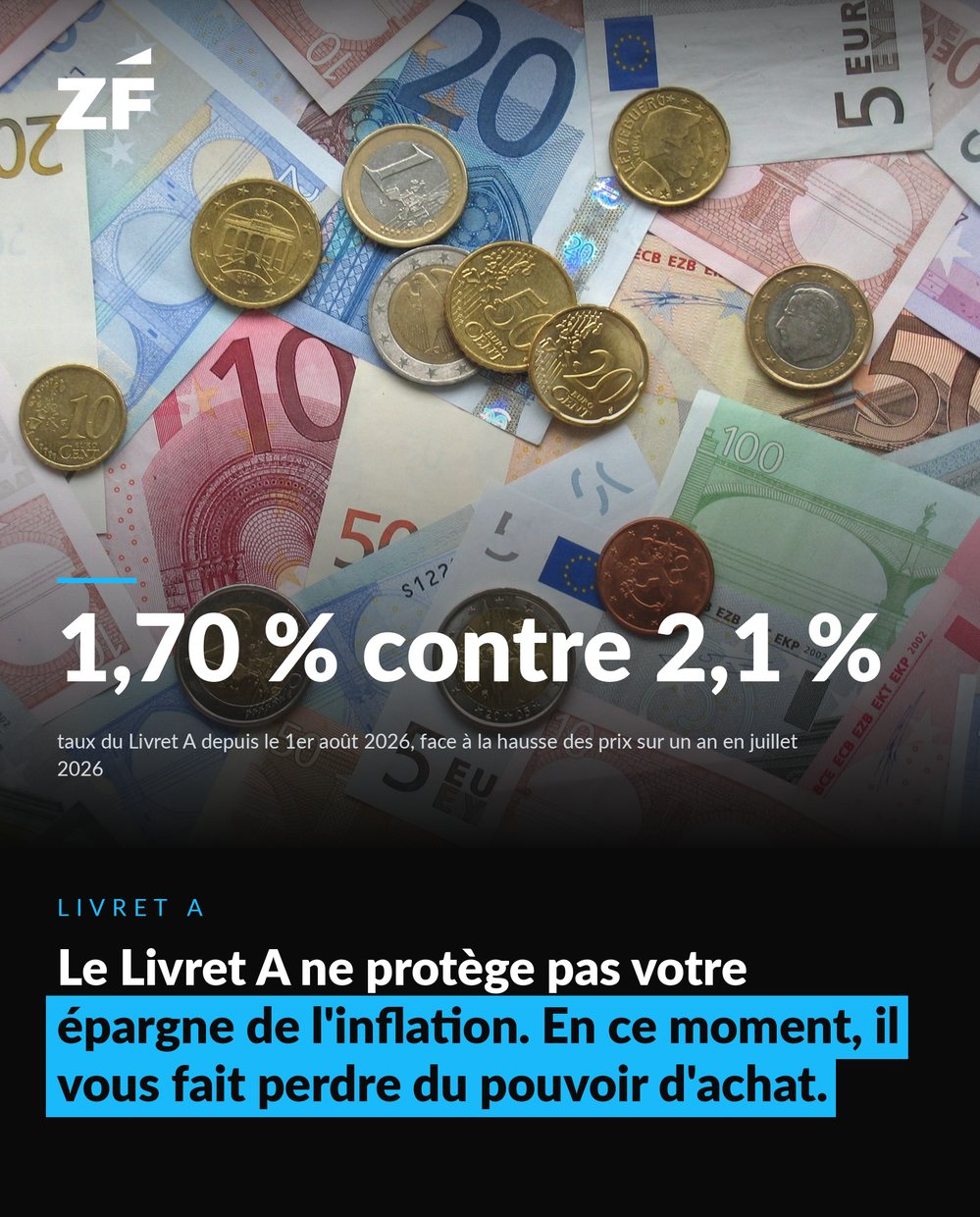
The decree of July 28, 2026 sets the Livret A rate at 1.70% for the period from August 1, 2026 to January 31, 2027. Over the same period, INSEE estimates the year-on-year rise in consumer prices at 2.1% in July 2026 (provisional estimate, Informations rapides no. 188). The gap is 0.4 points: the real return is negative.
How much does that actually cost?
On a Livret A at the cap, meaning €22,950, a 0.4-point gap represents about €92 of lost purchasing power in a year. The displayed balance, meanwhile, keeps rising.
In other words: the Livret A is an excellent rainy-day account and a poor investment. It doesn't preserve value, it slows down its erosion.
Three caveats, because they matter
- 1.70% is net of income tax and social levies, not 1.70% gross. Against a taxable bank savings account, the comparison needs to be made net.
- July 2026 inflation is a provisional estimate; final figures are published August 14, 2026. And a real return should be judged against average annual inflation, not a single month.
- The rate is revised twice a year. The real return was clearly negative in 2022-2023, and positive in some years of the 2010s. This isn't a fixed fate, it's a current situation.
Why it still matters: rainy-day savings — three to six months of expenses, available immediately — belong on a Livret A, and the negative real return is the price of that availability. Beyond that, leaving €22,950 parked at 1.70% is a decision. Not the absence of one.
For you
- What share of your Livret A genuinely corresponds to your rainy-day fund?
- Is the rest there by choice, or by default?
Source: decree of July 28, 2026 on interest rates for certain regulated savings products (JORF); INSEE, Informations rapides no. 188, July 2026.
View the source →