#WEALTH & ESTATE PLANNING
On €1 million passed to a child, it's the deceased's country of residence that decides what's left.
Published on August 15, 2026 · to be rechecked on January 1, 2027
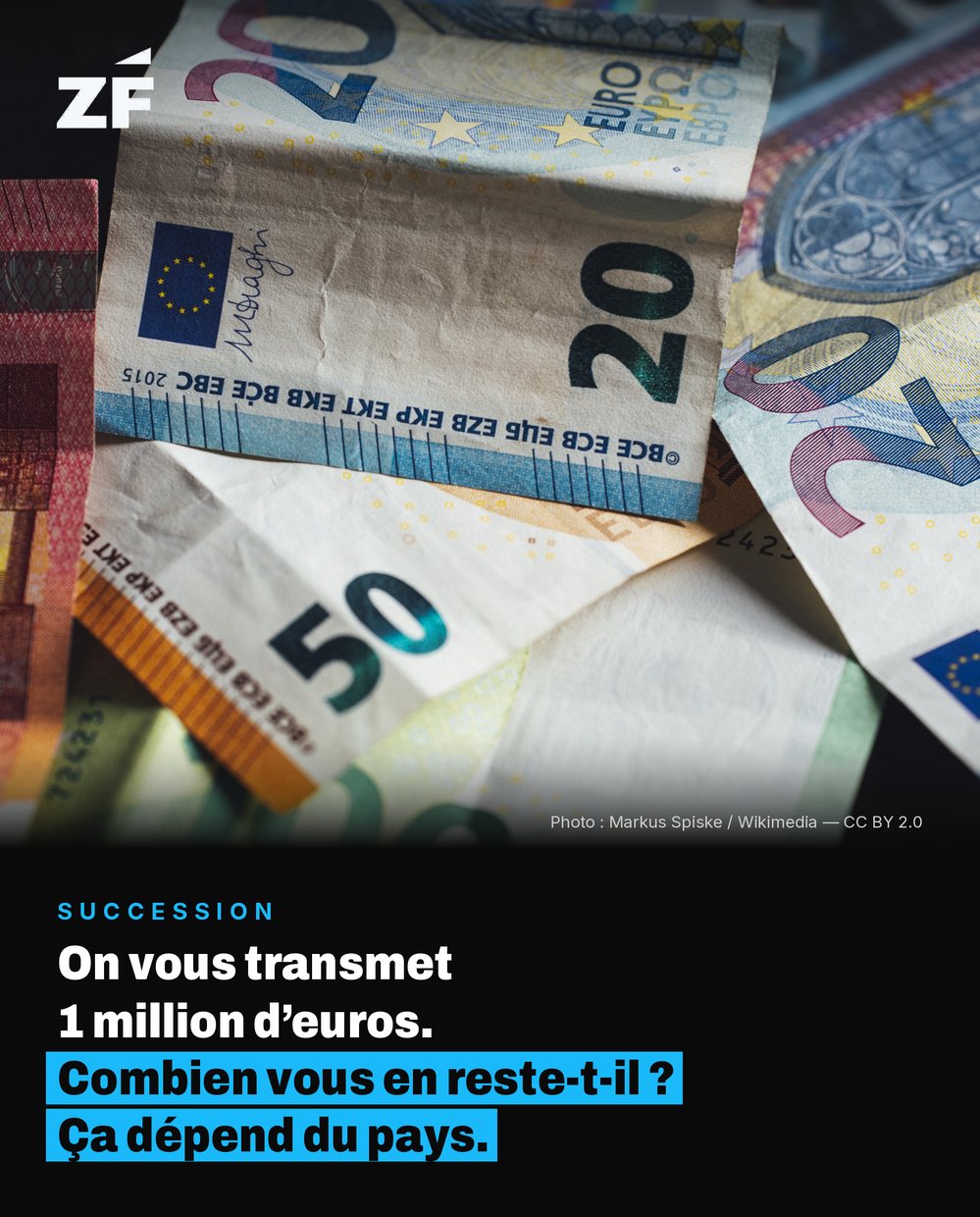
That's what the French tax authorities take when a parent passes €1 million to their only child: a €100,000 allowance, then a progressive scale from 5% to 45%. The child is left with €787,000, meaning 21% of the sum goes to inheritance tax. For the same transfer, Germany takes about €90,000 (a €400,000 allowance per child), Italy takes almost nothing (a €1 million allowance), Portugal grants a full exemption, and Madrid applies a 99% reduction for children.
Isn't it your own residence that matters?
No: it's the deceased's. Moving yourself, once the estate is opened, changes nothing about the bill.
In other words: along with Belgium, France is one of the few European countries where inheritance and gift taxes exceed 1% of total tax revenue. This isn't a marginal issue — it's concentrated on the largest transfers.
Three caveats, because they matter
- It isn't the heir's residence that counts, it's the deceased's at the time of death: moving yourself changes nothing about the bill.
- In France, the tax calculated isn't always the tax paid: gifts every fifteen years, splitting ownership, life insurance — the toolkit for passing on wealth is large, and widely used.
- A country lenient on inheritance isn't necessarily lenient on everything else: on income, wealth or real estate, the ranking looks different.
Why it still matters: France taxes few estates overall, but taxes the largest ones heavily. This isn't a marginal issue: it's concentrated exactly where the gap with neighboring countries is widest.
For you
- Have you ever calculated what your own estate transfer would cost?
- Would a neighboring country's inheritance rules change your decision to move there?
Source: national tax scales 2026; La finance pour tous, overview of inheritance tax regimes in Europe.
View the source →