#PURCHASING POWER & CONSUMPTION
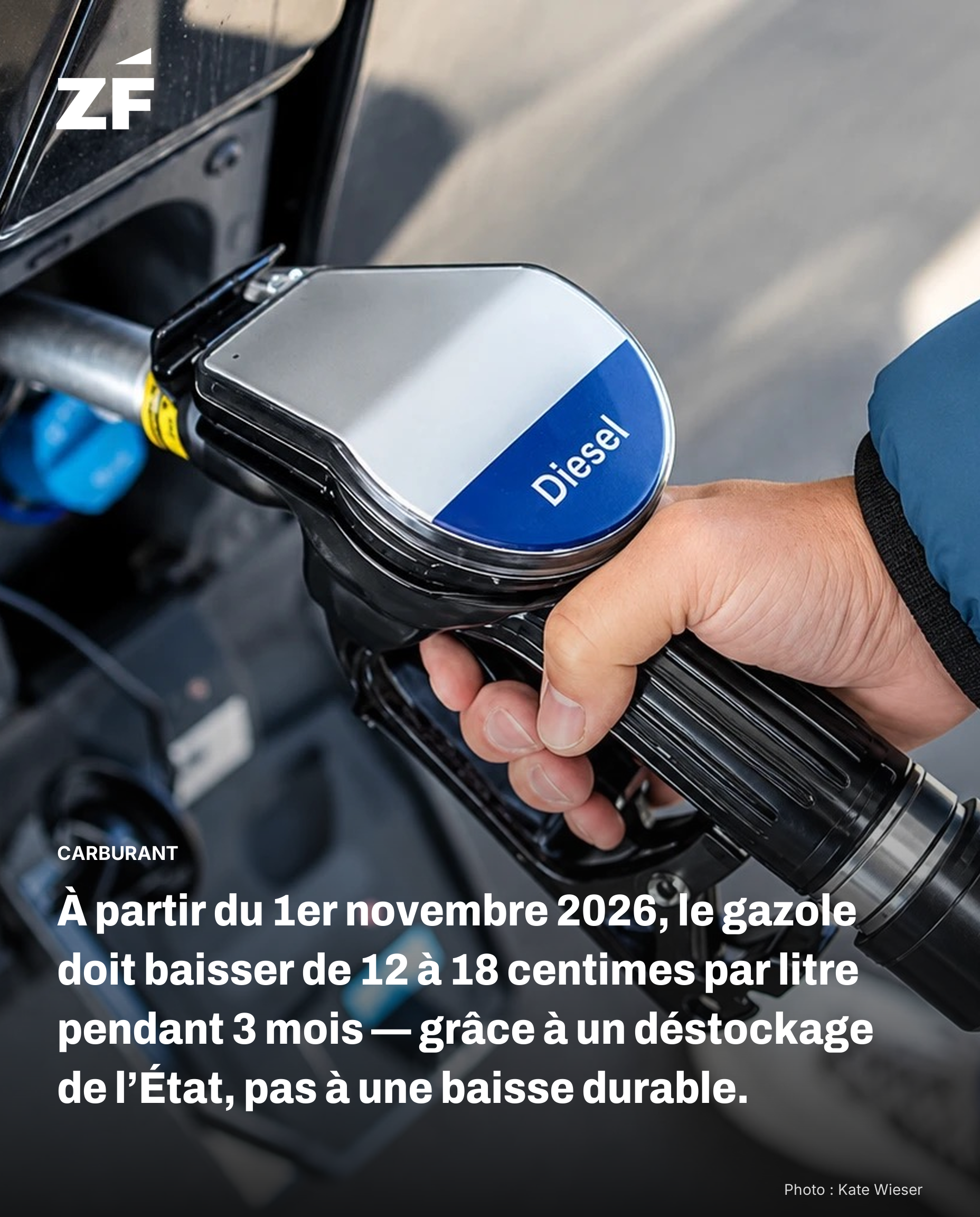
“Fuel is falling, good for my budget!” Yes, but read the small print: from 1 November 2026, diesel should drop by 12 to 18 cents per litre — thanks to a temporary government stock release, not a lasting fall.
Published on November 1, 2026 · to be rechecked on February 28, 2027
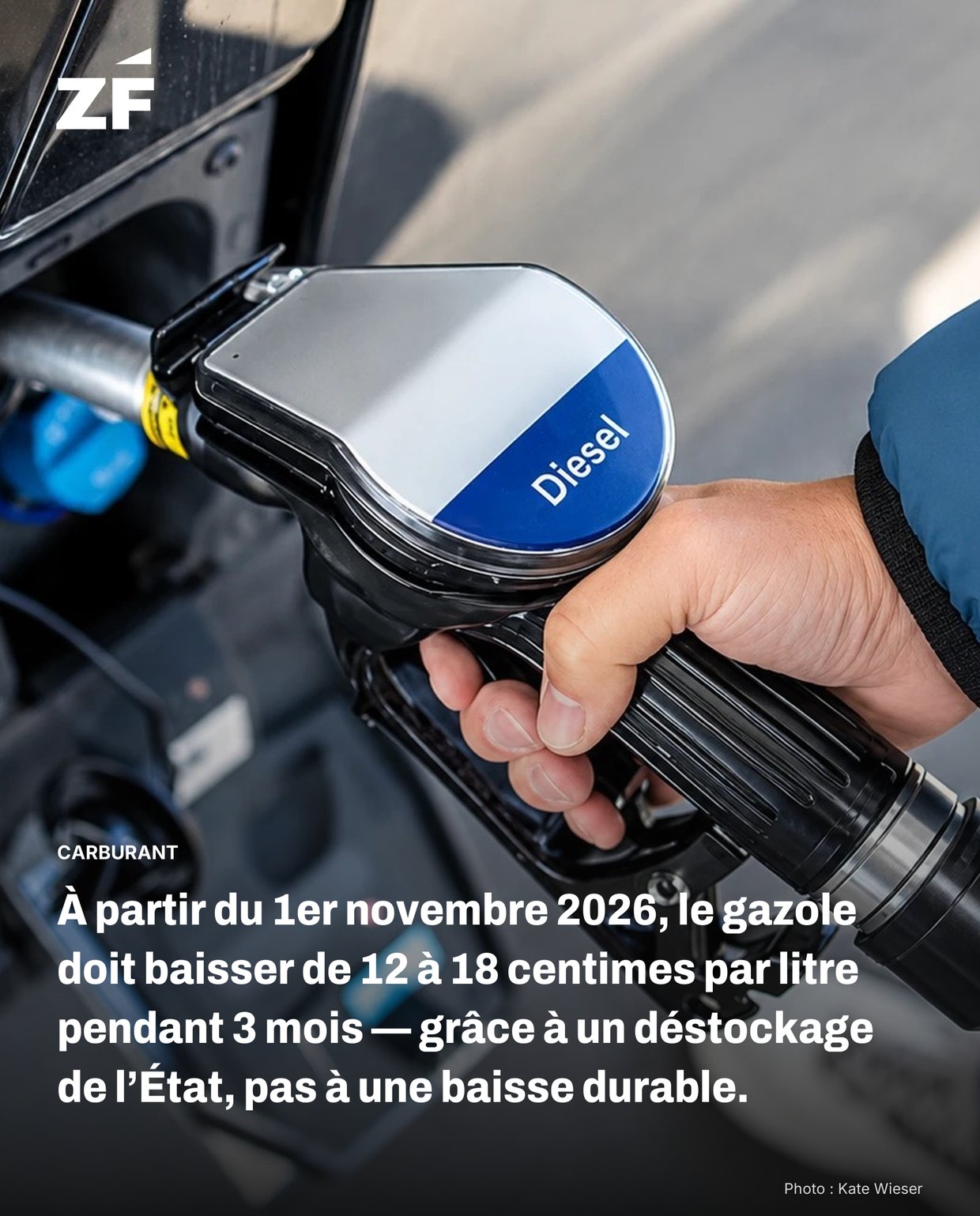
On 7 October 2026, the French government announced a cut in diesel pump prices, targeted for 1 November for three months (November, December, January). The mechanism: SAGESS releases onto the market 10 million barrels of diesel from French strategic reserves, sold to distributors at their pre-crisis purchase price — the gap being meant to pass through to the displayed price. It is part of a G7 agreement of 2 October to coordinate the release of 100 million barrels. The government estimate: a drop of 12 to 18 cents incl. tax per litre, taking the average from about €2.36 to €2.18-2.24/L if oil prices stay stable — up to €10 saved on an average tank. Some chains go further: TotalEnergies showed €2.15/L in its Access network, E. Leclerc announces −21 cents in 742 stations. But the government stresses the cut is “not guaranteed at every station”, not immediately visible (until volumes are delivered), and temporary: beyond three months, nothing is planned, and the strategic stocks will have to be rebuilt.
Does this cut make diesel lastingly cheaper?
No: it is neither a tax cut nor a fall in oil prices, but a one-off release of strategic reserves for 3 months. It is a CYCLICAL (temporary) fall, not a STRUCTURAL (lasting) one. Afterwards, if prices stay high, the litre can regain the cents saved — and the stocks must be rebuilt.
In other words: putting reserves on the market to lower the price is a one-off boost to supply, not a deep fall: the real price still depends on oil prices and taxes.
Four caveats that belong with the number
- It is a NATIONAL-AVERAGE estimate (12-18 c€/L), “not guaranteed at every station”: an already-cheap station will stay so, and gaps persist.
- It is TEMPORARY: planned for 3 months (Nov.-Jan.). Afterwards, nothing is settled, and the strategic stocks must be rebuilt.
- It is neither a tax cut nor a fall in oil prices: it is a stock release (10M barrels) acting on short-term supply.
- Only DIESEL is concerned: not petrol, not heating oil.
Why it still matters: for the budget: up to ~€10 saved per tank for 3 months, if the cut passes through at your station. To understand: telling a cyclical fall (a one-off release) from a structural one (taxes, oil price) avoids false conclusions — the underlying price does not change.
For you
- Did you know the difference between a temporary fall (stock release) and a lasting one (taxes, prices)?
- What weighs most, in your view, in the diesel price: oil, taxes or distribution?
Sources: French government statement (7 October 2026, info.gouv.fr); franceinfo, Kelwatt and prix-carburant.eu (October-November 2026).
View the source →