#MARKETS & INVESTING
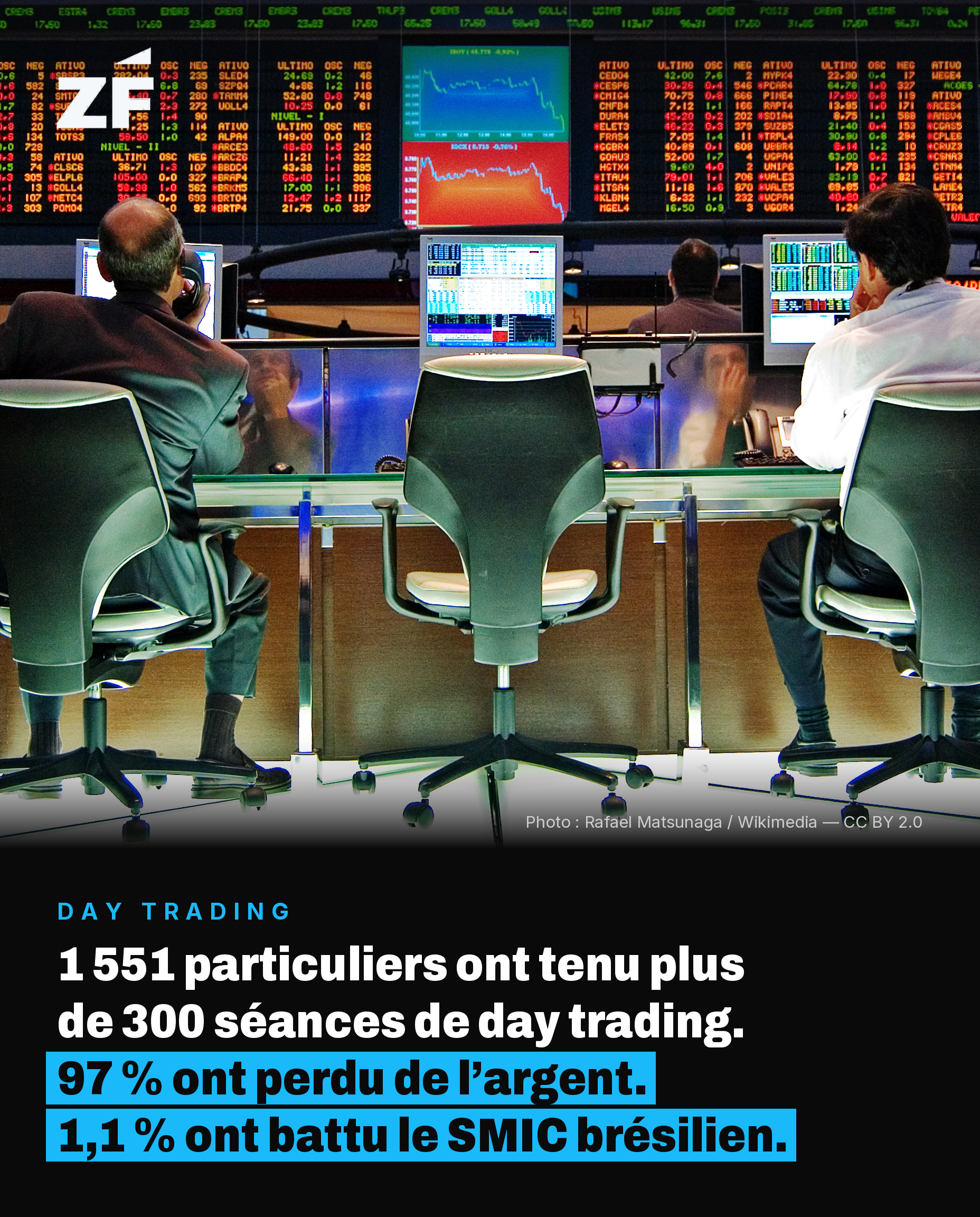
Of 1,551 individuals who kept day trading for more than 300 sessions, 97% lost money.
Published on August 12, 2026
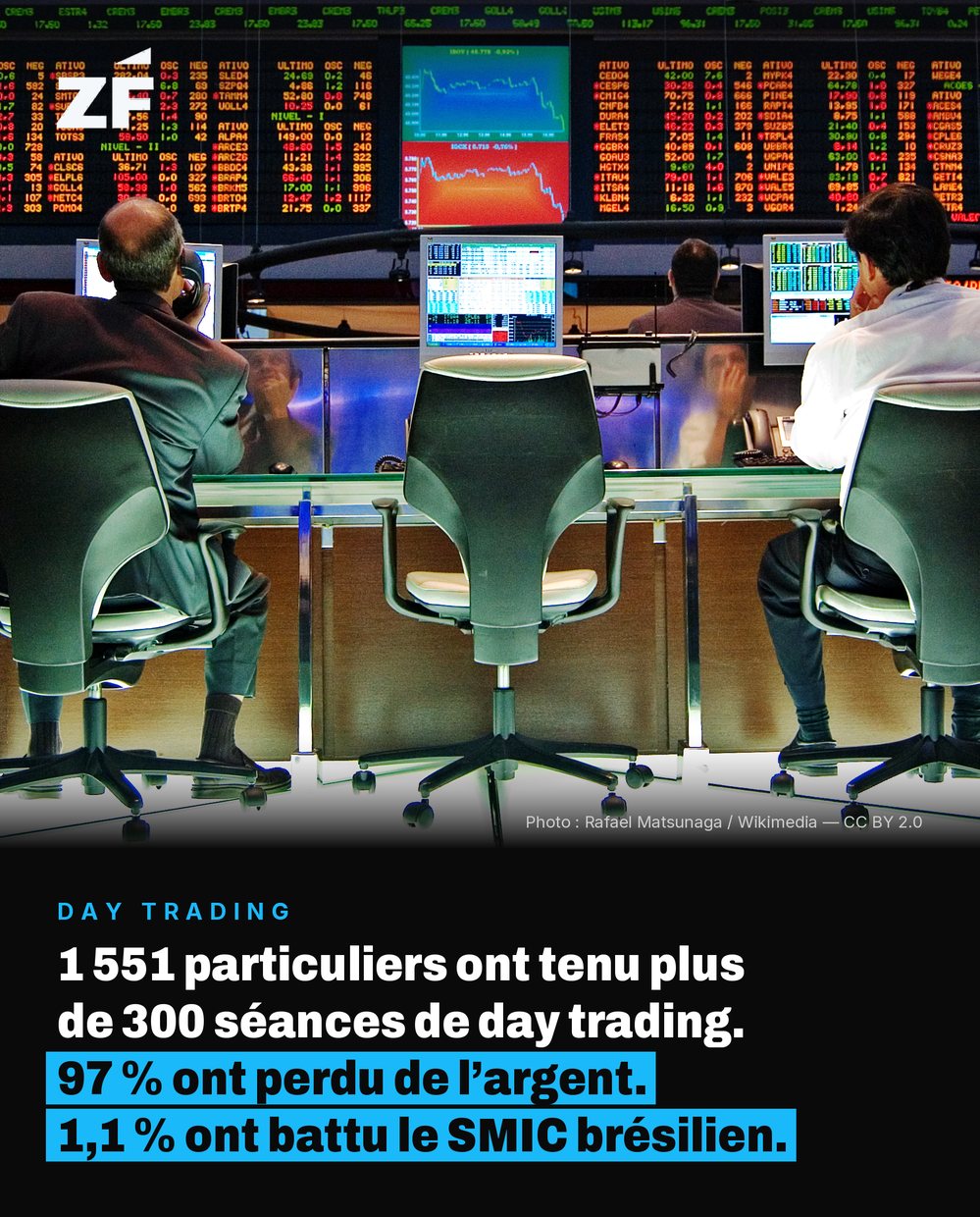
Fernando Chague, Rodrigo De-Losso and Bruno Giovannetti obtained, from Brazil's securities regulator (Comissão de Valores Mobiliários), the records of 19,646 individuals who started day trading mini-Ibovespa futures contracts between 2013 and 2015, tracked through 2017. Of them, 1,551 persisted for more than 300 sessions. 97% of these persistent traders lost money, net of fees.
What about those who made money?
1.1% earned income above Brazil's minimum wage, and 0.5% above a bank teller's starting salary. Out of 1,551 people, that's seventeen individuals above the minimum wage.
In other words: persistence doesn't improve the outcome. Those who hang on the longest aren't the ones who eventually succeed: they're the ones who kept losing the longest.
Three caveats, because they matter
- The study covers index futures in Brazil, a highly leveraged market. The proportions don't transfer as-is to every asset class.
- It measures a net-of-fees result but doesn't put a value on the time spent, which also has a cost.
- It ends in 2017, before commission-free brokers became widespread. That changes the costs, not the difficulty of the exercise.
Why it still matters: courses that promise to make a living from day trading don't run up against a lack of discipline among their students. They run up against a result measured across thousands of real people.
For you
- Do you know the net result, fees included, of your trades last year?
- How many hours did you spend on it, and what hourly rate does that work out to?
Source: Fernando Chague, Rodrigo De-Losso & Bruno Giovannetti, “Day Trading for a Living?”, 2020.
View the source →