#INVESTOR BEHAVIOR
Funds earn more than the people who hold them — not because of fees, but because of timing.
Published on August 18, 2026 · to be rechecked on August 1, 2027
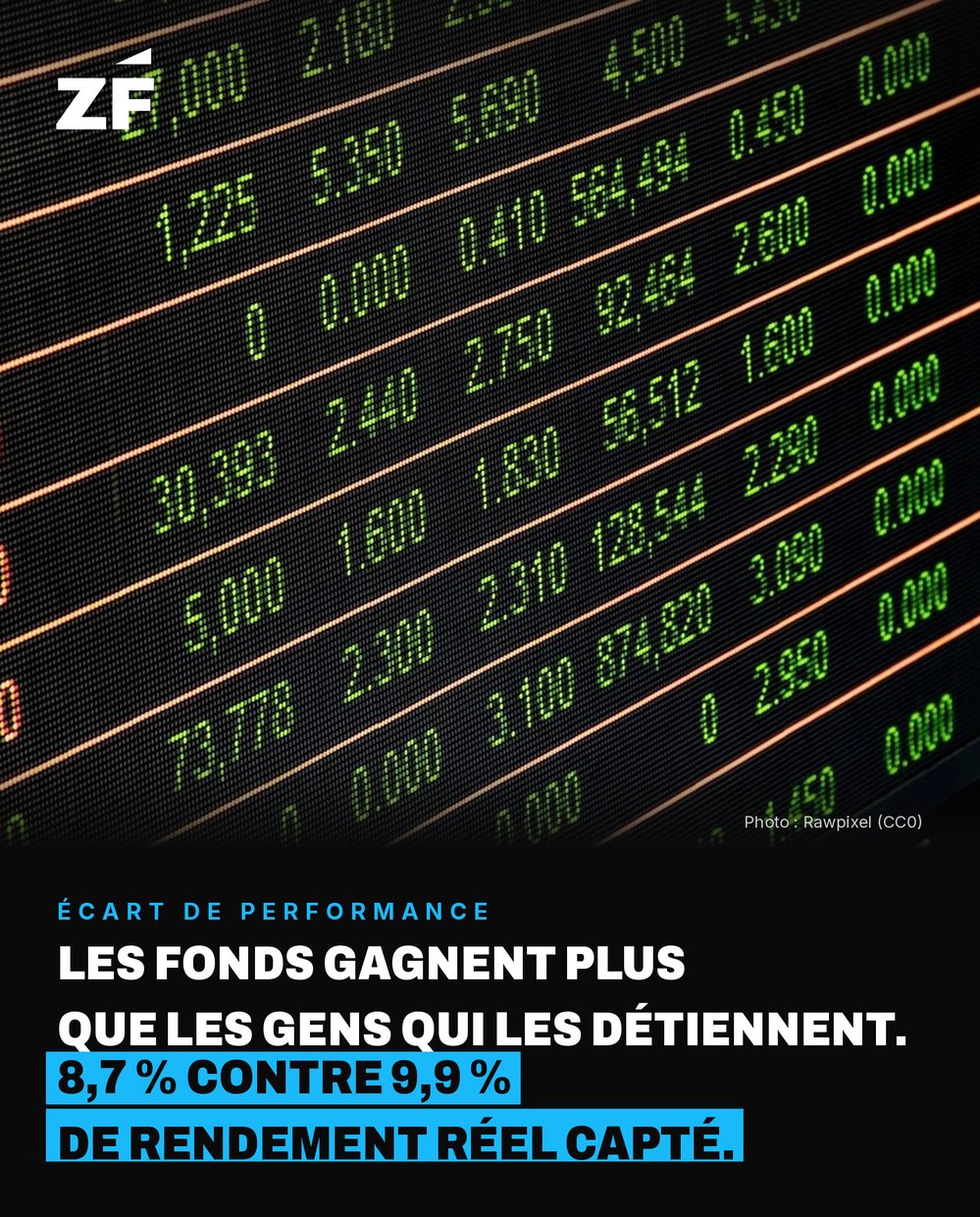
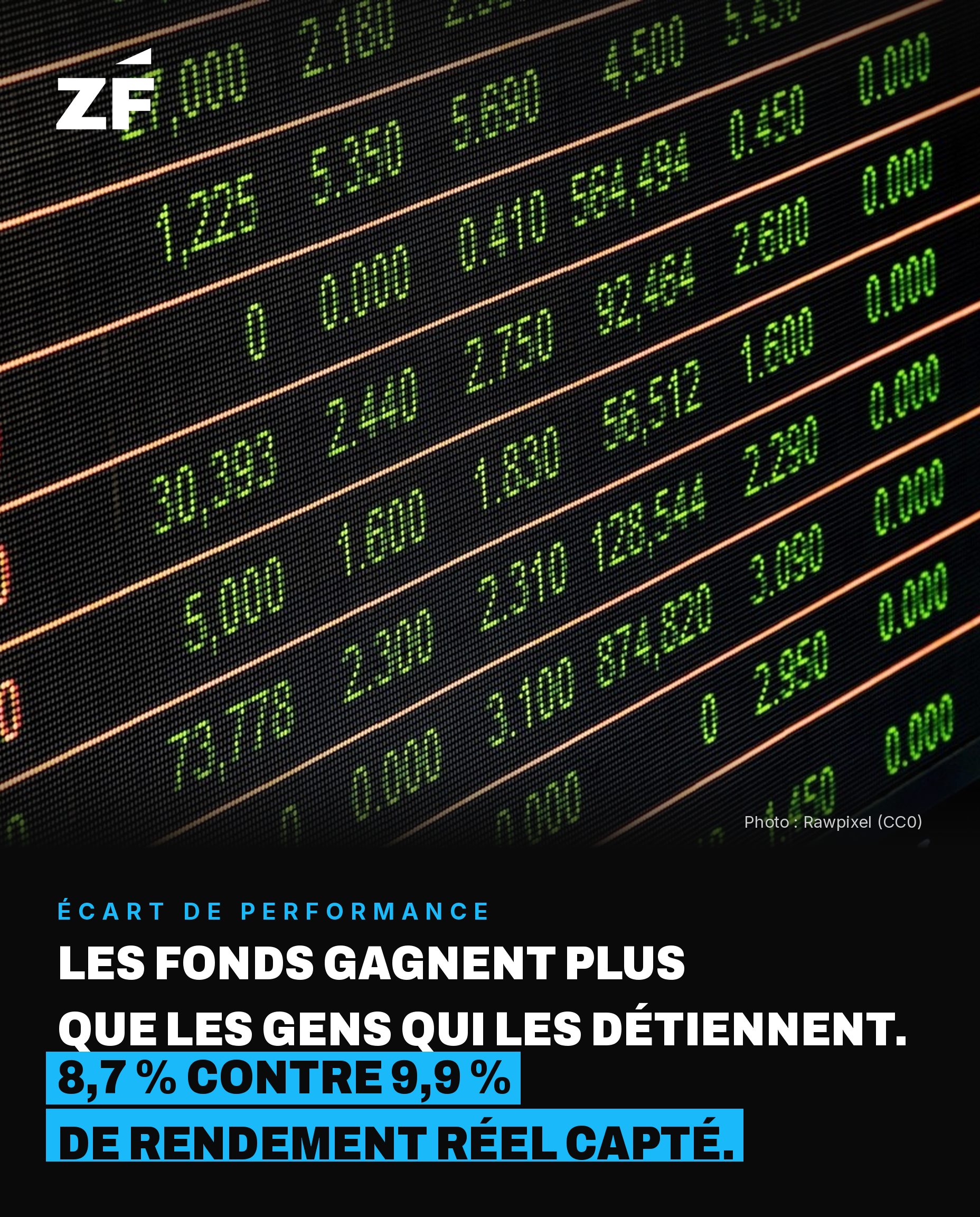
Every year, Morningstar compares two measures across more than 25,000 U.S. open-end funds and ETFs: the fund's reported return and the return actually received by the average investor, which accounts for the timing of purchases and sales. Over 2016-2025, the gap reaches 1.2 points a year: 8.7% versus 9.9%, meaning about 12% of performance was lost to market timing — nearly $3.8 trillion in total.
Is the gap the same for every type of fund?
No: allocation funds used in retirement plans (automatic enrollment, few trades) capture nearly 97% of their own performance. Crypto ETFs launched in 2024, by contrast, show a gap of about 14 points a year over their short history.
In other words: the problem isn't picking the wrong funds, it's buying and selling them at the wrong time — often after a rally, often after a drop.
Three caveats, because they matter
- The calculation depends on the fund's aggregate flows: a single large inflow at the wrong time can widen the gap for every holder, including those who did nothing.
- Narrow index-tracking funds show a smaller gap: the gap also measures dispersion in management styles, not just savers' behavior.
- ETFs, easier to trade intraday, show a wider gap (1.6 points) than traditional open-end funds (1.2 points).
Why it still matters: a fund's or an index's reported return isn't what the average investor pockets. What protects that return the most is automating contributions — not picking the fund.
For you
- Are your contributions automatic, or do you decide when to invest?
- Have you ever sold after a drop, or bought after a strong recent rally?
Source: Morningstar, “Mind the Gap 2026”, Jeffrey Ptak's annual study of more than 25,000 U.S. open-end funds and ETFs, data as of December 31, 2025.
View the source →