#MARKETS & INVESTING
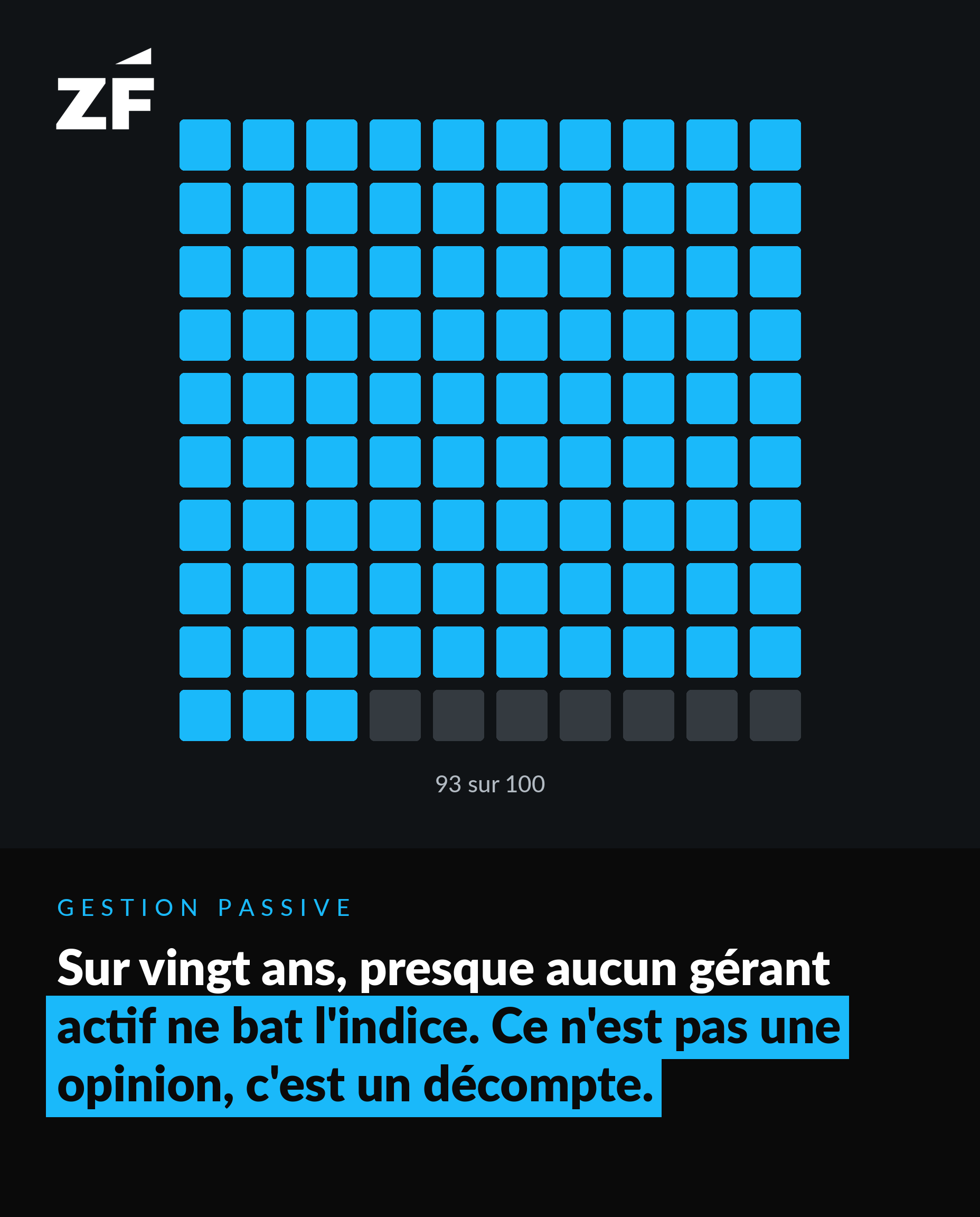
Over twenty years, almost no active manager beats the index. This isn't an opinion, it's a tally.
Published on August 6, 2026
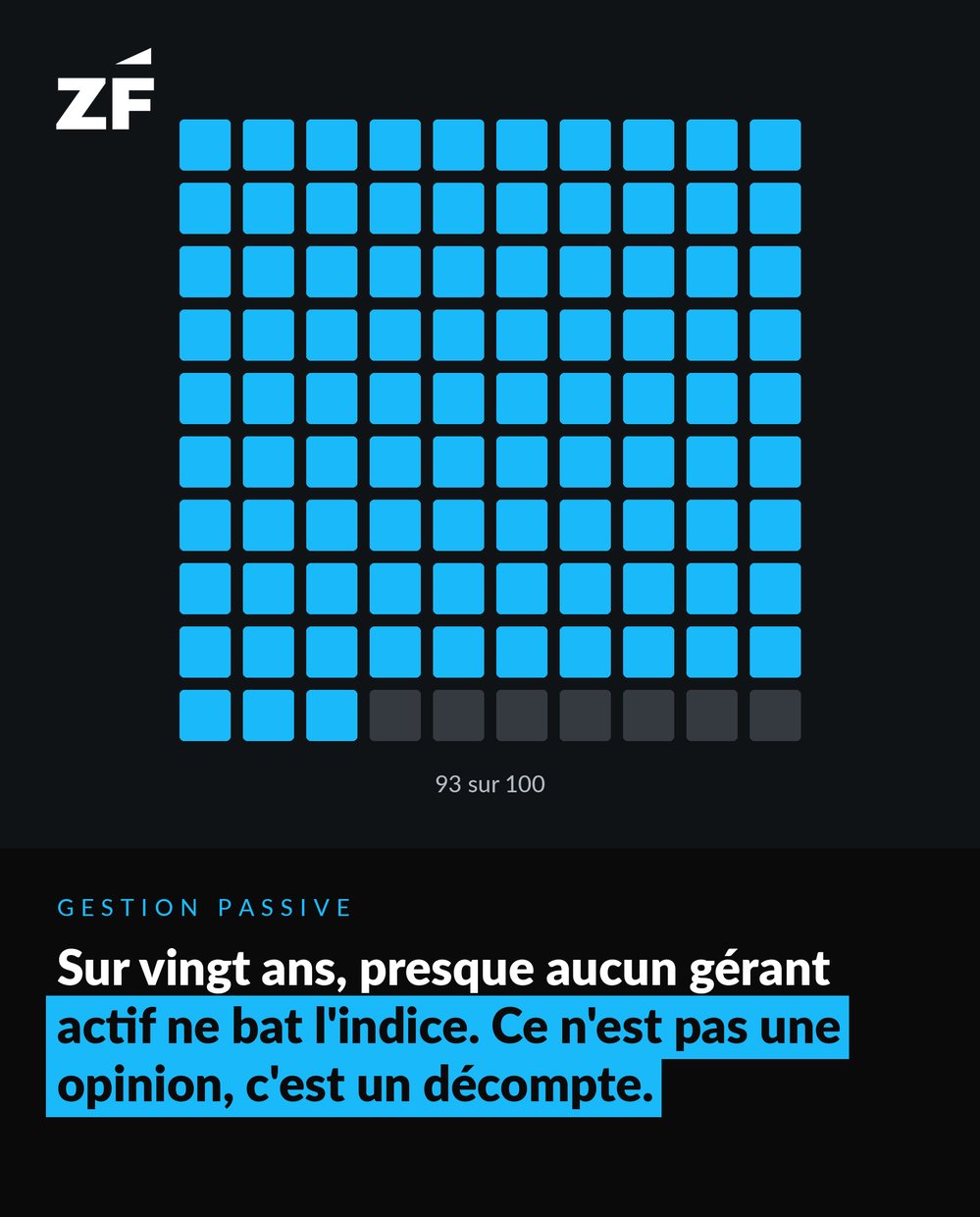
S&P Dow Jones Indices publishes the SPIVA Scorecard twice a year, comparing every actively managed fund to its benchmark index while correcting for survivorship bias: funds that closed along the way are added back in. In the U.S. edition through the end of 2025, 92.89% of U.S. large-cap equity funds were beaten by the S&P 500 over twenty years. Across all domestic equity funds versus the S&P Composite 1500, the figure rises to 95.01%.
What about a single year, when stock-picking is supposed to shine?
In 2025, 79% of large-cap funds underperformed the S&P 500, versus 65% in 2024. That's the fourth-worst year for active management in twenty-five years of SPIVA history.
In other words: roughly one fund in fourteen survives twenty years while beating its index. And there's no guarantee it's the same one from one decade to the next.
Three caveats, because they matter
- SPIVA compares funds net of fees to an index that bears none. Part of the verdict is mechanically a verdict on fees.
- The methodology is disputed by active managers: category boundaries, equal-weighting funds rather than assets under management. A study commissioned by the Investment Adviser Association argues SPIVA understates active management's performance.
- The result is overwhelming for U.S. large caps, the most efficient market in the world. It's less clear-cut for small caps and some emerging markets.
Why it still matters: the question isn't “do good managers exist?” — they do. It's “can you identify them in advance, and for twenty years?” The tally suggests you can't.
For you
- What's your conviction that your fund is among the 7% based on?
- What fees do you pay each year, and for what measured outperformance?
Source: S&P Dow Jones Indices, SPIVA U.S. Scorecard, Year-End 2025, report 1.
View the source →