#WEALTH & ESTATE PLANNING
Getting married builds wealth. Divorcing destroys it — at almost the same percentage.
Published on August 13, 2026 · to be rechecked on January 1, 2028
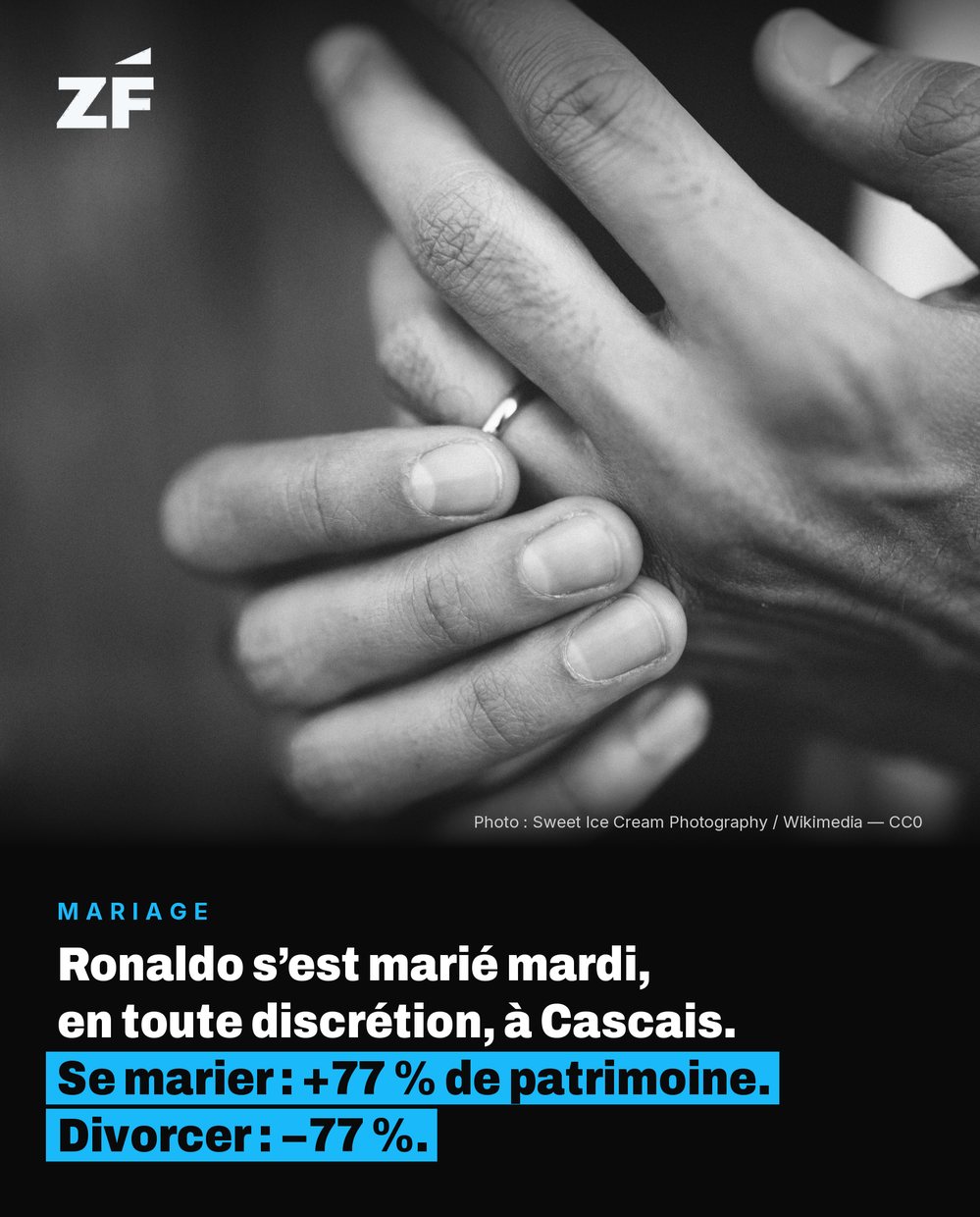
That's the per-person wealth gap between married people and singles, measured by Jay Zagorsky (Ohio State University) in “Marriage and Divorce's Impact on Wealth,” published in 2005 in the Journal of Sociology. The data come from the National Longitudinal Survey of Youth, which follows the same Americans from their twenties into their forties. Singles' wealth grows slowly; married people's wealth grows by about 16% for each year of marriage.
And when it ends?
The same number, in reverse: people who divorce lose an average of 77% of their wealth. The decline starts four years before the divorce, not on the day of the ruling.
In other words: two people living together share a rent, an insurance policy, subscriptions, and save more — an economy of scale, not a sentiment. A breakup destroys it, on top of splitting the existing stock.
Three caveats, because they matter
- Correlation isn't causation: people who marry are on average more educated and more financially stable even before marrying — part of the gap already existed.
- The data are American and cover a generation born between 1957 and 1964: French law and taxation change the mechanics, though not necessarily the direction.
- The marital property regime matters a lot: in France, community of after-acquired property applies by default, with separation of property available by contract — this choice, free to make, is costly to skip.
Why it still matters: the line that really weighs on a couple's wealth isn't the ring or the ceremony: it's pooling a household, or splitting one.
For you
- Do you know your marital property regime?
- Would you have chosen the same one with these two numbers in front of you?
Source: Jay L. Zagorsky, “Marriage and Divorce's Impact on Wealth”, Journal of Sociology, 2005.
View the source →