#ECONOMY & POLITICS
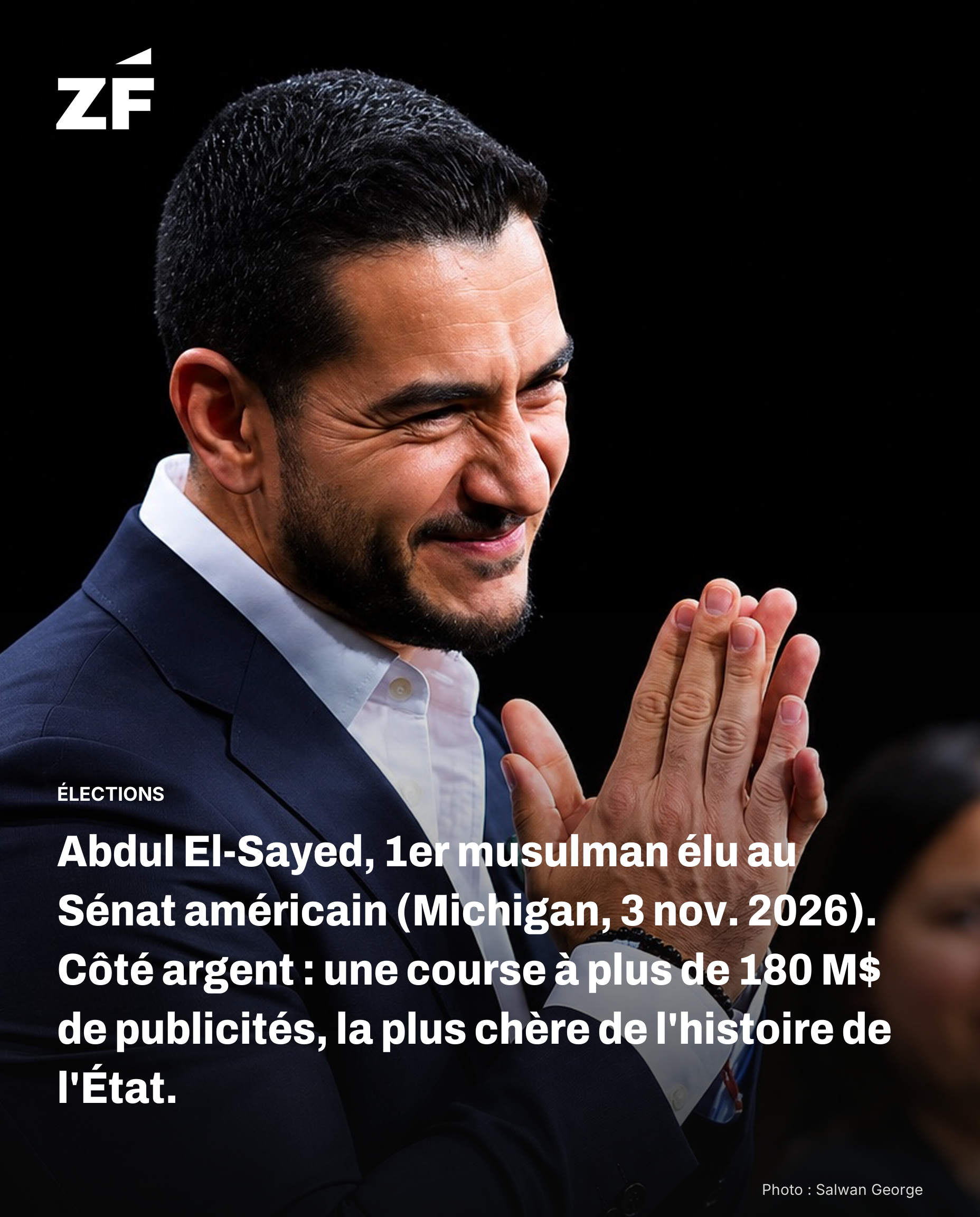
On 3 November 2026, Abdul El-Sayed (Democrat) won Michigan's US Senate seat against Mike Rogers (Republican): he becomes the first Muslim elected to the US Senate. The event is political and historic — but on the money side, one figure stands out: over $180M in advertising poured into this single race.
Published on November 4, 2026 · to be rechecked on January 31, 2027
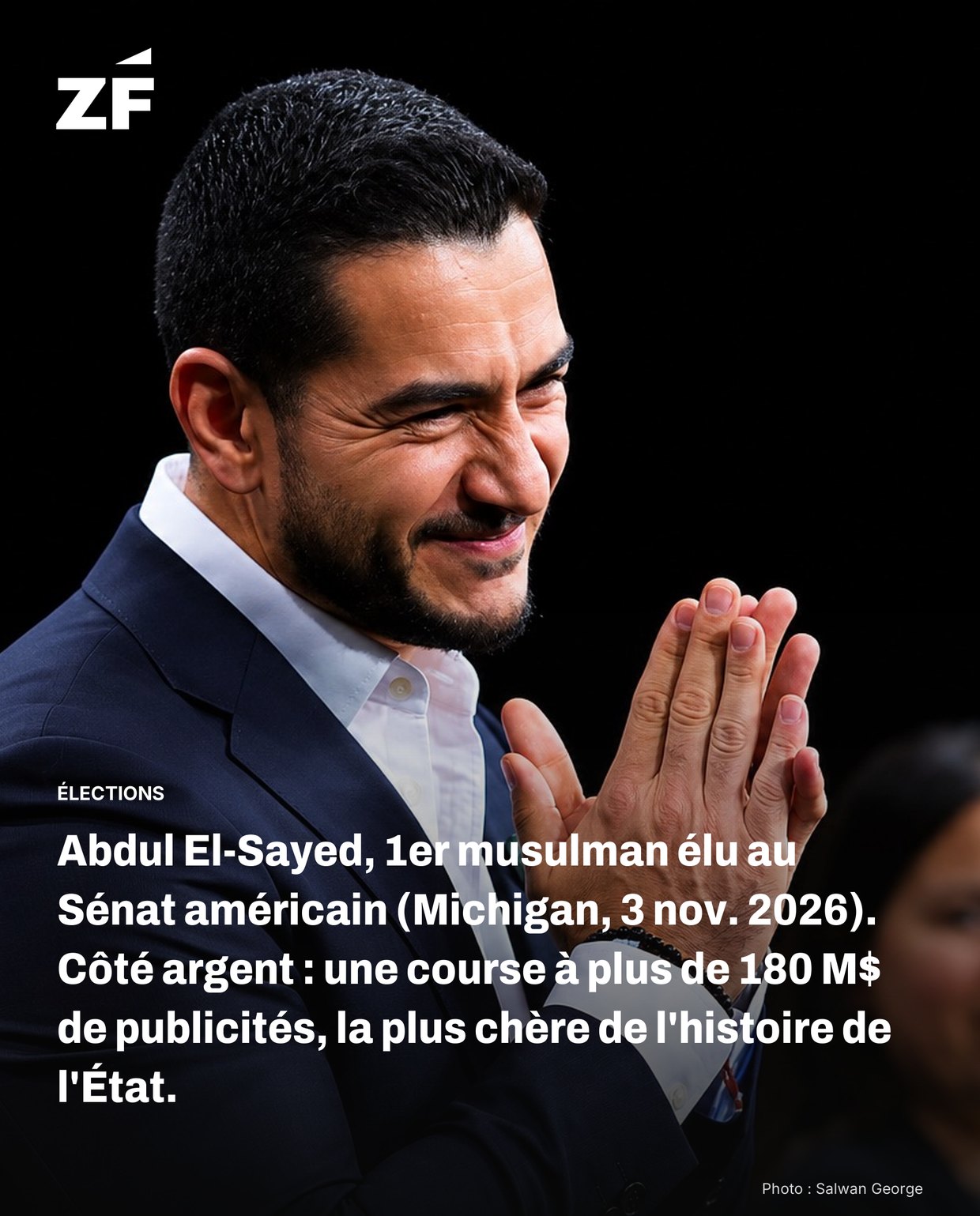
Abdul El-Sayed — a doctor and former Detroit public-health director — wins with about 51.9% to Mike Rogers' 46.1% (nearly 6 points), a race called by the Associated Press overnight (the count was still being finalised at the announcement). It is a historic first: no Muslim had ever sat in the Senate (the 100-member upper chamber) in nearly 237 years; the House of Representatives, by contrast, has already had several (Keith Ellison, Ilhan Omar, Rashida Tlaib, André Carson). The economic angle is staggering: per Axios, the race saw ~$181M in advertising (the most expensive in Michigan's history), and the Detroit News puts total spending at up to ~$243M, most of it from outside groups. Notable: per AdImpact, Republican groups had spent MORE than Democrats (about $78M to $63M in early October)… and still lost. These sums stem from the US framework: since the Citizens United ruling (2010), “outside” spending (super PACs) is unlimited.
What does this have to do with finance?
The event is political and historic. But the money at stake is an economic fact: a single Senate election can mobilise over $180M in advertising. In the US, since the Citizens United ruling (2010), “outside” spending (super PACs) is unlimited — hence these sums, with no equivalent in France, where campaign spending is capped and partly reimbursed by the state.
In other words: a US Senate campaign is the budget of a large SME… times a hundred. And here, the side that spent the most (Republican) still lost: money sets the entry price of American democracy, but does not buy the win.
Four caveats that belong with the number
- Result called by the Associated Press on election night: the final count was not yet official at the announcement (a close race, ~6 points).
- “First Muslim in the Senate”: the House of Representatives has already had several (Ellison, Omar, Tlaib, Carson). It is the upper chamber that never had one.
- Spending figures vary by what is counted: ~$181M in ads (Axios), >$205M disclosed, ~$243M all-in (Detroit News). Most comes from outside groups, not the candidate alone.
- France/US comparison to handle with care: opposite systems — caps and reimbursement in France, unlimited outside spending in the US since Citizens United (2010).
Why it still matters: beyond the historic symbol, the economic story is the staggering cost of US campaigns. Understanding where the money comes from (super PACs, donations, unlimited spending) illuminates the whole US political system — and, by contrast, shows how France frames and caps electoral financing.
For you
- Did you know a single Senate race could cost over $180M in advertising?
- Unlimited campaign spending (US) vs capped and reimbursed (France): which system seems healthier to you?
Sources: Associated Press, CBS News, Al Jazeera, The Hill, Bridge Michigan, Time (3-4 November 2026); spending: Axios, Detroit News, AdImpact (October 2026). Context: Citizens United v. FEC ruling (2010).
View the source →