#EMPLOYMENT & SOCIETY
We tend to assume public-sector jobs come with a safer retirement than private-sector ones. Official projections say the opposite.
Published on August 20, 2026
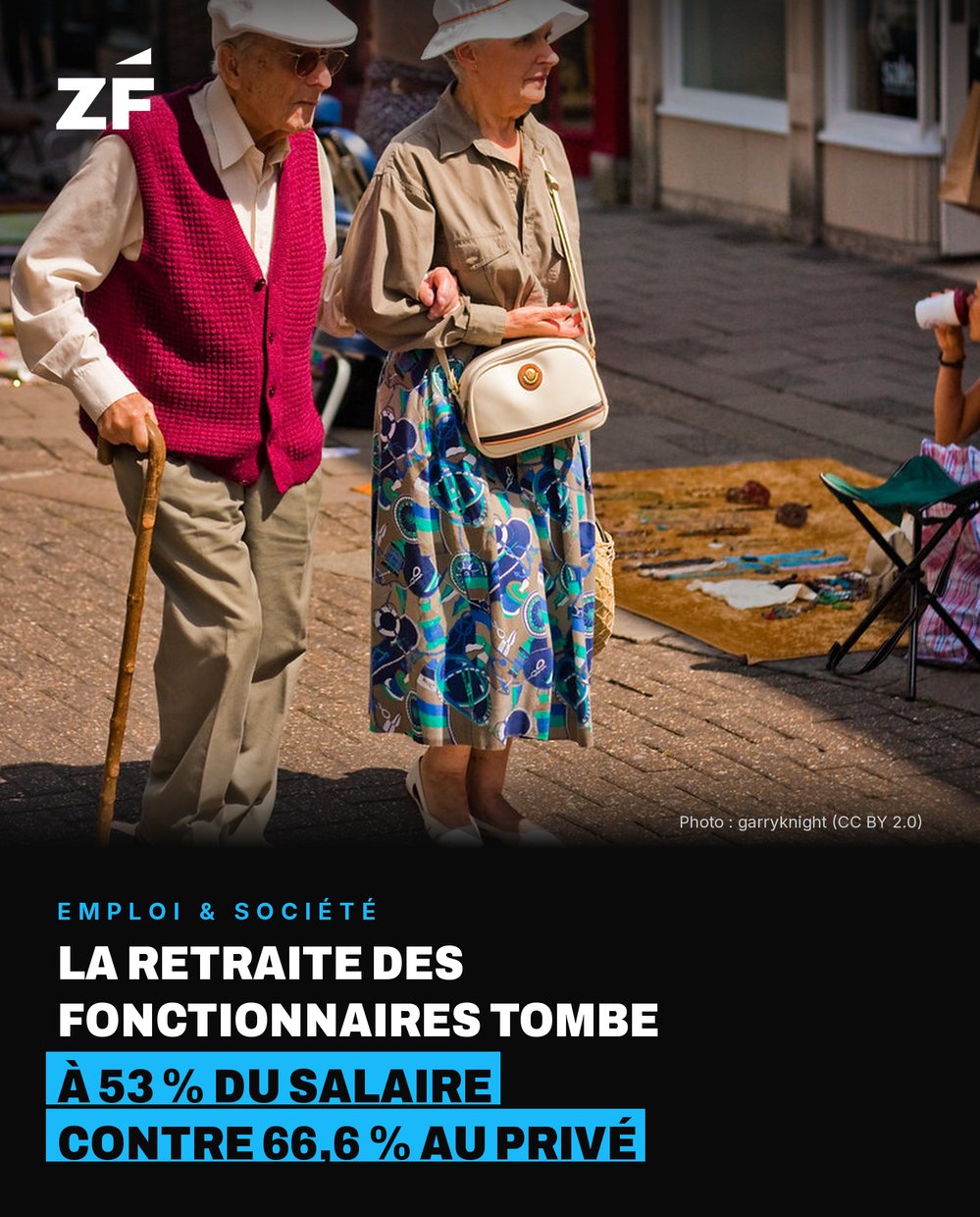
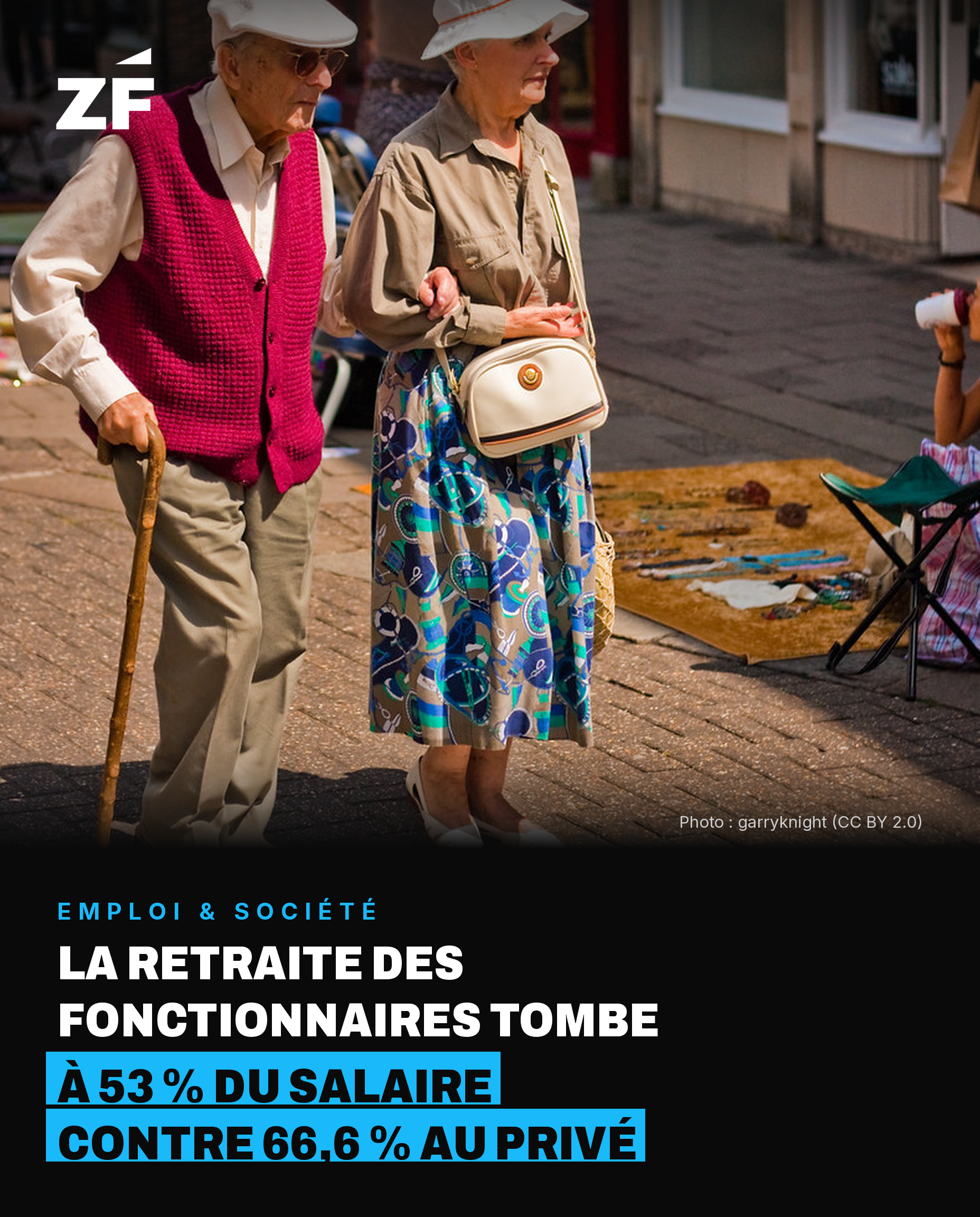
The Conseil d'orientation des retraites (COR), the official body that monitors France's pension system, publishes a projection report every year. In its June 2025 edition, it projects that the replacement rate would stay above two-thirds (66.6%) for a private-sector non-executive employee born in 1963 and the ten generations that follow, with the decline continuing more slowly after that. For a non-executive civil servant, however, the decline is “much faster and more pronounced”: the replacement rate could be limited to 53% starting with the generation born in 1975. Part of the gap comes from how each pension is calculated: private-sector pensions are based on the 25 best salary years, while civil servants' pensions are based on their indexed salary over the last six months, excluding bonuses — and bonuses make up a growing share of public employees' total pay, increasingly detaching the calculation base from what they actually earn at the end of their career. The COR's 2026 annual report, published in June 2026, confirms the same trend: replacement rates for both private-sector employees and civil servants would keep declining across generations, with the decline remaining more pronounced for civil servants.
Why would the public sector, often seen as more protective, fall behind this much?
Civil servants' pensions are calculated on their indexed salary over the last six months, excluding bonuses, even as bonuses carry increasing weight in their total pay — the COR itself identifies this calculation method as a central factor behind the sharper decline, and points to possible reform options.
In other words: the image of a public sector that's “protected” in retirement, more generous than the private sector, no longer holds up in official projections for the youngest generations — if anything, the opposite is emerging.
Three caveats, because they matter
- These are decades-long projections (COR reference scenario: productivity +0.7%/year, unemployment at 7%), not a measurement already observed for generations that haven't retired yet.
- The figure covers a typical “non-executive, full career” profile; executives, incomplete careers, or active-duty categories (police, hospital staff) follow different trajectories.
- The precise 66.6% / 53% figures come from the June 2025 report; the following report, published in June 2026 with new demographic assumptions, confirms the same trend without republishing this generational detail in its summary.
Why it still matters: comparing retirement security between the public and private sectors based only on job stability, without looking at how the pension itself is calculated, can lead to the opposite conclusion from the one the COR projects for the youngest generations.
For you
- Did you assume the public sector guaranteed a higher replacement rate than the private sector?
- If you're a civil servant, have you already factored this projection into your personal savings effort?
Source: Conseil d'orientation des retraites (COR), annual report “Évolutions et perspectives des retraites en France”, June 2025 (detailed generational figures); June 2026 annual report (confirms the trend); UNSA Retraités analysis, July 2025.
View the source →