#CORPORATE FINANCE & BUSINESS
“A major selling means it’s leaving.” Not necessarily: on 27 October 2026, TotalEnergies cashes in $800 million by selling its onshore oil stake in Nigeria — but keeps the gas.
Published on October 27, 2026 · to be rechecked on June 30, 2027
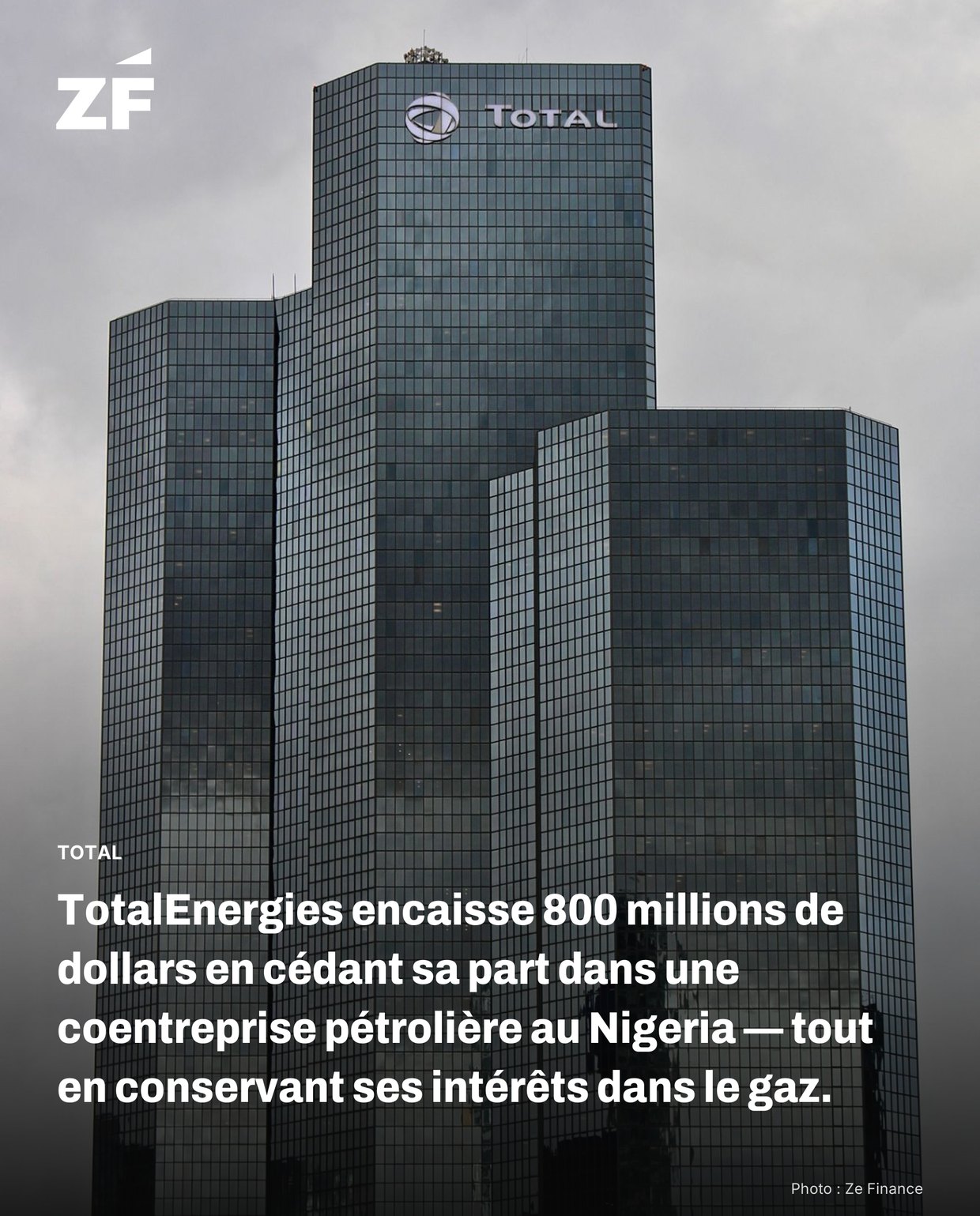
On 27 October 2026, TotalEnergies completed the sale of its 10% stake in the Renaissance joint venture (formerly SPDC) in Nigeria for $800 million, to the local company Vaaris. The JV operates onshore oil fields; before the deal it comprised Renaissance (30%, operator), TotalEnergies (10%), Eni (5%) and state-owned NNPC (55%). TotalEnergies is not leaving the country: it keeps its economic interests in three gas licences (OML 23, 28 and 77), which supply about half of Nigeria LNG’s gas. The deal, announced back in January 2026, fits a broader trend: Western majors are exiting Nigerian onshore oil — marked by spills, theft and litigation — in favour of local players, while keeping gas and offshore, seen as more profitable and less risky.
Is cashing in $800M from a sale a “profit” for Total?
Not directly: $800M is the SALE price of the stake, not a net profit. A disposal brings cash and cuts exposure to an asset; the effect on earnings depends on the asset’s book value. It is above all a strategic refocusing choice.
In other words: selling an asset is not “earning” $800M: it is turning a stake into cash, and choosing what you want — or don’t want — exposure to.
Four caveats that belong with the number
- TotalEnergies is not leaving Nigeria: it sells onshore oil but keeps the gas (OML 23, 28, 77, ~50% of Nigeria LNG’s gas).
- $800M is a sale price, not a net profit: the earnings impact depends on the asset’s book value.
- It is a deep trend: majors are exiting Nigerian onshore oil (spills, theft, litigation) in favour of local players.
- Announced back in January 2026 and completed on 27 October; Eni sold its 5% stake the day before.
Why it still matters: to understand a major: selling assets is not a sign of weakness, it is portfolio management — a trade-off between profitability, risk and strategy (here: less risky onshore oil, more gas and LNG). For investors: the sale brings cash and clarifies the risk profile.
For you
- Can you tell the difference between an asset’s sale price and the profit realised?
- Why would a major keep the gas but sell onshore oil, in your view?
Sources: TotalEnergies press release (27 October 2026); Boursorama, ABC Bourse, Offshore Energy (27 October 2026).
View the source →